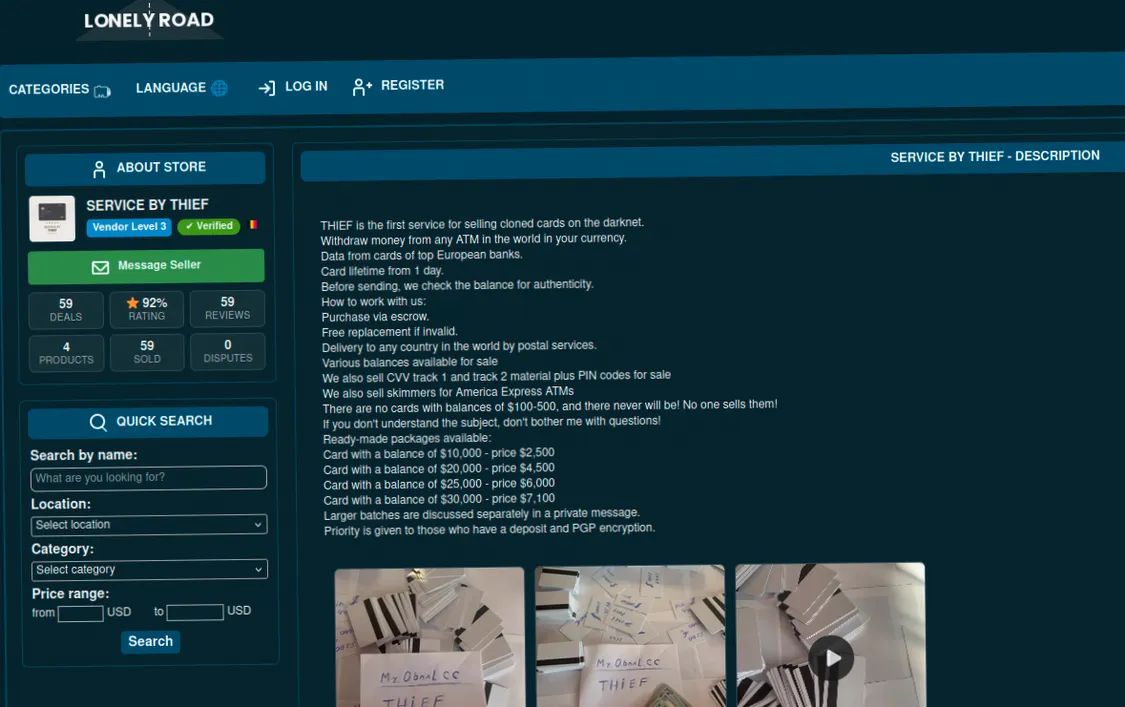
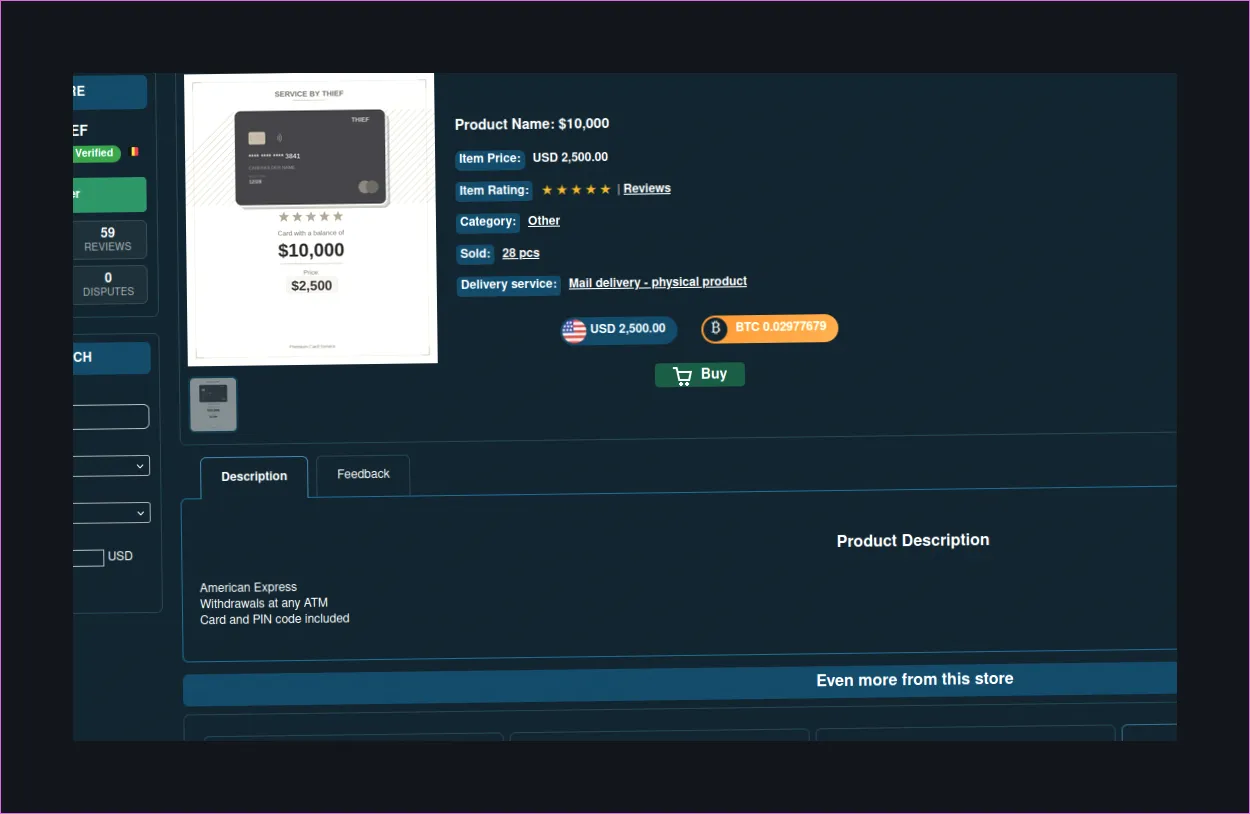
An easy way to acquire cash was believed to have been found by Mark T., a resident of Tampa Bay, Florida, aged 34. For $480 in cryptocurrency, six cloned debit cards with PIN codes were acquired by him from a dark web site in November 2024. These cards had fraudulent magnetic strips that were linked to real accounts.
Initially, $4,200 was withdrawn by him from three separate ATMs. The identification and subsequent arrest of Mark T. occurred within 72 hours due to his actions at the fourth ATM. This account serves not as a guide on obtaining such cards but rather as an example of how quickly law enforcement can apprehend a previously elusive criminal. It underscores the effectiveness of ATM security and the digital evidence trail that connected him to the U.S. Secret Service.
The exact site used for his transactions remains confidential. This case underscores significant vulnerabilities, even when engaging with services available on carding forums in the dark web. Investigators managed to trace the evidence leading to Mark's arrest in a remarkably short time frame. The incident illustrates the intricate relationship between technology, surveillance, and law enforcement strategies in combating cybercrime.
We will not name the website where the purchase was made.
How Does Card Skimming Operate?
Carding represents a criminal enterprise that revolves around the illegal trade and utilisation of compromised banking details. Mark's method exemplifies a conventional approach within this illicit field. The first step involves gathering sensitive data. Criminals typically acquire magnetic card tracks known as track 1 and track 2. This is achieved through the use of sophisticated evasion tactics designed to elude detection from skimming device sensors. Commonly employed tools include skimmers attached to ATMs and point-of-sale terminals. Additionally, shimmer devices can extract data from chip-enabled cards. Phishing schemes frequently serve as another avenue for obtaining such data. In other instances, criminals might directly purchase data dumps from darknet platforms, which provide the essential magnetic stripe information.
Upon successfully gathering the required data, the next stage is the embossing process. This entails transferring the stolen information onto blank plastic cards. The resultant cloned cards are crafted to closely resemble authentic ones, displaying an embossed name, an expiration date, and a card number. This ensures that the counterfeit card appears legitimate for transactional purposes.
Acquiring the corresponding PIN is vital for facilitating cash withdrawals. If the PIN has been compromised, often achieved through techniques such as an overlay keypad or a hidden camera on an ATM, the buyer gains possession of a fully operational card. This enables immediate cash withdrawals, effectively bypassing safeguards against card skimming.
The concluding phase consists of extracting cash. The buyer withdraws funds from an ATM before the victim has a chance to react or report the fraudulent activity. This brief window is critical for the perpetrator. Subsequently, money laundering takes place to transform the illicit cash into cryptocurrency. This can occur through a Bitcoin ATM or by utilising a peer-to-peer exchange, which serves to obscure the origins of the funds. Mark sourced his counterfeit cards from an unnamed online marketplace, opting to pay with Monero to maintain his anonymity. The delivery of these cards was conducted discreetly, which fostered the perception of a secure transaction. However, it is crucial to note that ATMs fulfil more functions than merely dispensing cash; they also gather evidence.
Contemporary ATMs are equipped with advanced surveillance features. These include integrated cameras and additional concealed cameras that monitor activities from multiple perspectives. Each transaction is thoroughly documented, capturing the exact time, amount, and card identifiers involved. Moreover, ATMs possess geolocation capabilities that transmit their physical location to banking records. All transaction requests are recorded, revealing connection details. Mark's use of an ATM in a Tampa suburb, during which he withdrew $700, was documented by the built-in camera, providing substantial evidence against him.
In conclusion, Mark's situation underscores the significance of comprehending ATM functionalities alongside the dangers associated with card skimming.
Why Are ATMs a Major Vulnerability for Criminals?
An ATM operates as a sophisticated monitoring tool, not merely a cash dispenser. Many individuals, including Mark, overlook this reality. Each machine incorporates various security mechanisms.
To begin with, an integrated camera is installed to capture the user's facial image. This camera functions at a resolution of 1080. Additionally, it often possesses infrared capabilities, enabling effective operation in dim lighting. This feature guarantees visibility during evening transactions. The primary objective of these cameras is to prevent credit card skimming, thereby protecting the interests of the financial institution.
Furthermore, some ATM models are designed with a concealed camera positioned at an alternative angle. This secondary camera is not visible to the public. The combination of these two cameras ensures comprehensive monitoring of user activities.
Every transaction is thoroughly documented. The records include information such as the time of withdrawal, the amount taken, card numbers, and the ATM's unique identifier. The status of each transaction is also logged. This data is crucial during investigations into criminal activities.
Geolocation information is also captured. The ATM identifies its geographical location and transmits this data to the central logging system of the bank. This feature allows for precise tracking of where each transaction takes place.
Furthermore, the bank's processing system is monitored through a network log that documents all interactions. This log contains metadata about the established connections. Such digital traces are vital for tracing transaction flows.
Cameras recorded Mark's identity while he used an ATM located in a Tampa Bay suburb. He did not attempt to conceal his appearance. He withdrew $700, took his card, and left the location in just twenty-three seconds. This short video was enough for identification. Law enforcement has noted that many criminals mistakenly think that the protections of the darknet extend to the real world. An ATM serves as a clear example of how digital misconduct can lead to a loss of anonymity. The importance of surveillance footage from ATMs as evidence is highlighted. Therefore, any approach to combat card skimming must recognize the significance of physical surveillance.
How Did Law Enforcement Unravel the Scheme?
The timeline of Mark's illicit activities illustrates how modern fraud detection techniques function effectively.
On November 1, 2024, reports of unauthorized withdrawals came from Florida, Georgia, and North Carolina. In response, the banks promptly froze the affected accounts and initiated internal fraud alerts. Such timely measures are crucial for reducing further financial losses.
Day 3: Fraud detection systems within the banks recognised a troubling pattern. Rapid withdrawals from specific cloned cards were occurring across multiple states. This unusual activity triggered an immediate alert, leading to the escalation of the case to the bank's fraud investigation team. Early detection is vital for enhancing card security measures.
On Day 5, the investigation of financial crimes was assumed by the U.S. Secret Service. Transaction details and surveillance footage from the involved ATMs were requested by an analyst from this agency.
Day 8: Surveillance footage from one of the ATMs provided a clear image of a suspect. Mark T. was identified through a clear facial match in the driver's licence database, with no prior criminal convictions. Analysis revealed that all unauthorised cash withdrawals took place at locations within a 40-mile range from his home.
On Day 12, a warrant was secured to examine Mark's online activities, encompassing his cryptocurrency wallet transactions, ISP logs, and browsing history. The analysis of ISP data indicated access to Tor exit nodes coinciding with the times of the withdrawals. Authorities linked Mark's identity to the cryptocurrency purchase through a court order aimed at the exchange where he obtained Monero.
Day 14: During a search of Mark's home, officials found crucial evidence. Six blank plastic cards and a magnetic stripe reader/writer were discovered. The laptop held records of activities on darknet marketplaces and the Tor Browser. Additionally, $3,200 in cash and the original packaging related to card shipments were seized, providing vital evidence for the ongoing investigation.
On Day 15, Mark came under custody. He acknowledged that four of the six cards were used for cash withdrawals during his interrogation. Unfortunately for him, the other two cards had already been disabled by the banks before he could utilize them. This rapid resolution highlights the weaknesses of card cloning schemes when confronted with effective law enforcement measures.
Mark's actions had significant financial implications, highlighting the seriousness of his criminal conduct. Understanding these figures is crucial in demonstrating the rapid gains from illegal activities, followed by equally swift justice, showcasing how effectively fraudulent operations can be dismantled.
The Consequences: Numbers and Prison
Mark's unlawful behaviour led to serious consequences. The details illustrate the severity of his actions and the penalties imposed:
Total Withdrawals: 4
Amount Withdrawn: $4,900
Card Expenses: $480
Days Until Arrest: 15
A federal prison sentence of 5 years, equivalent to 60 months, has been imposed.
Fines and restitution amount to a total of $22,000.
The period of supervised release lasts for 3 years.
These figures demonstrate the significant dangers linked to such illegal activities. The brief interval from the withdrawals to the arrest was remarkably quick. This suggests the effectiveness of modern fraud detection and investigation methods. Additionally, the fines imposed far exceeded the amount that was stolen. The lengthy prison sentence serves as a considerable deterrent. This instance acts as a clear warning for those considering participation in activities related to card skimming or similar illegal actions. The systems designed for credit card skimmer protection are tailored to detect individuals involved in these offences.
Why Monero Did Not Guarantee Anonymity
Mark chose Monero, a cryptocurrency distinguished for its privacy attributes, for his transaction. However, investigators managed to trace this acquisition back to him. The inquiry revealed significant flaws in his attempts to remain anonymous.
The method he employed to obtain Monero was fundamentally flawed. Mark acquired Monero from a centralized exchange that mandated identity verification. To meet this requirement, he provided his passport along with a selfie. Following the issuance of a court order, the exchange revealed both his identity and the details of his transactions. Although tracking later Monero transactions can be complex, the details surrounding his initial purchase—particularly the date and amount—served as crucial evidence. This illustrates that card skimming protection encompasses more than just digital security protocols.
The timing of his actions raised essential concerns. The sequence of events—obtaining Monero, executing a transaction on the darknet, acquiring cards, and taking cash from ATMs—happened within a span of two weeks. Although this close timing might seem coincidental, it constituted compelling evidence linking him to those illicit activities. Advanced analytical tools are capable of easily identifying such patterns.
The tangible evidence collected during the investigation was convincing. Blank cards discovered at his residence had magnetic strips corresponding to data breaches of actual victims. This serves as direct physical proof. No cryptocurrency transaction can obscure such concrete evidence.
Furthermore, the surveillance footage provided irrefutable proof. A clear image of his face, captured on camera, serves as evidence that cannot be altered. Even if all other facets of his plan had been executed perfectly, the video alone would have directly associated Mark with the crime scene. This underlines the importance of physical security measures, even in digital crimes. It confirms that no credit card skimming protection system is entirely foolproof for offenders.
Mark's Critical Mistakes
Mark committed several crucial mistakes that led directly to his apprehension. These missteps offer important insights for individuals engaging in unlawful behaviour.
One of his significant mistakes was related to the locations of his cash withdrawals. The four ATMs he accessed were all located within 40 miles of his home. Such a concentrated withdrawal pattern can raise alarms in systems designed to detect unusual activities.
Another major oversight was Mark's neglect to conceal his identity during these transactions. He refrained from using any disguising items, like a mask or glasses. As a result, the surveillance cameras recorded clear images of his face, making it straightforward for law enforcement to recognize him through public records.
Moreover, Mark’s choice to buy Monero through a centralised exchange was a substantial blunder. This exchange enforced KYC (Know Your Customer) measures, linking his real identity with the cryptocurrency used for illicit transactions on the dark web. This action undermined his goal of maintaining anonymity.
During a police raid at his home, evidence that could incriminate him was uncovered. The authorities found a laptop, blank cards, and a magnetic stripe reader, all of which were linked to his activities on darknet sites, including his usage of the Tor Browser. Completely erasing digital footprints is famously challenging. Attempts to remove these records frequently result in recoverable evidence, which can create substantial risks in cases related to fraud.
Furthermore, Mark had a considerable sum of cash at his home. The $3,200 found during the search matched the typical denominations dispensed by the ATMs he accessed, further implicating him in illegal activities. This seemingly minor detail added to the evidence against him.
Lastly, the timing of his withdrawals was another significant oversight. He executed all transactions within a two-week period. Had he spaced these withdrawals over a longer duration, it could have reduced the likelihood of triggering fraud alerts. Nevertheless, his image would likely have still been recorded by ATM cameras. This case highlights the importance of implementing robust security measures and understanding the potential repercussions of one’s actions.
What Can We Learn From This Case?
Mark T.'s case offers valuable lessons for those involved in security. Financial institutions implement anti-fraud strategies to effectively tackle illegal activities. These strategies assess user behaviour, geolocation data, and scoring systems, operating independently. It is important for banks to continuously refine their machine learning algorithms for anomaly detection.
Effective investigations incorporate both digital and physical forensic techniques. For instance, video surveillance from ATMs can be a key asset; however, its value decreases without relevant digital transaction data. Accurate timestamps are crucial for identifying specific events shown in the footage. This combination of tactics is essential for thorough investigations. Furthermore, the belief that cryptocurrencies provide complete user anonymity does not ensure privacy. KYC-compliant access to cryptocurrency platforms and cash withdrawal locations connects the digital realm with the physical world. True anonymity is impossible under strict KYC enforcement.
Educating customers remains a critical issue. The individuals involved in this case were slow to identify fraudulent activity. Prompt reporting allows banks to quickly deactivate cards, mitigating financial losses for both clients and institutions. Continuous customer education is essential to reduce potential vulnerabilities.
In March 2025, a guilty plea concerning fraud and money laundering was entered by Mark T., which involved access devices as per 18 U.S.C. § 1029 and 18 U.S.C. § 1957, resulting in a sentence of 60 months in federal prison imposed by the U.S. District Court for the Middle District of Florida, in addition to three years of supervised release. He received a 60-month federal prison sentence, three years of supervised release, a fine of $22,000, and must provide restitution to three victims. The court acknowledged that while Mark was not the main perpetrator, he faced serious repercussions for his actions. This situation highlights the challenges law enforcement faces in targeting primary offenders while addressing those situated further down the criminal hierarchy.
Sources
[1] Credit card skimmers now need to fear the Reaper - Ars Technica
[2] US10496914B2 - Payment card overlay skimmer detection - Google Patents
[3] Skim Swipe POS retail terminal card skimmer detector
[4] Skim Scan ATM and Fuel Dispenser Card Skimmer Detector
[5] Fear the Reaper: Characterization and Fast Detection of Card Skimmers